
The Little Green Nut with Big Health Benefits
Why pistachios deserve a spot in your kitchen, and how these tasty green nuts can support your health, energy and overall well-being.
When it comes to healthy eating, some foods deserve more attention than they get. Pistachios are a perfect example. These small, bright green nuts are delicious and versatile, and they’re packed with nutrients that add real value to a balanced diet.
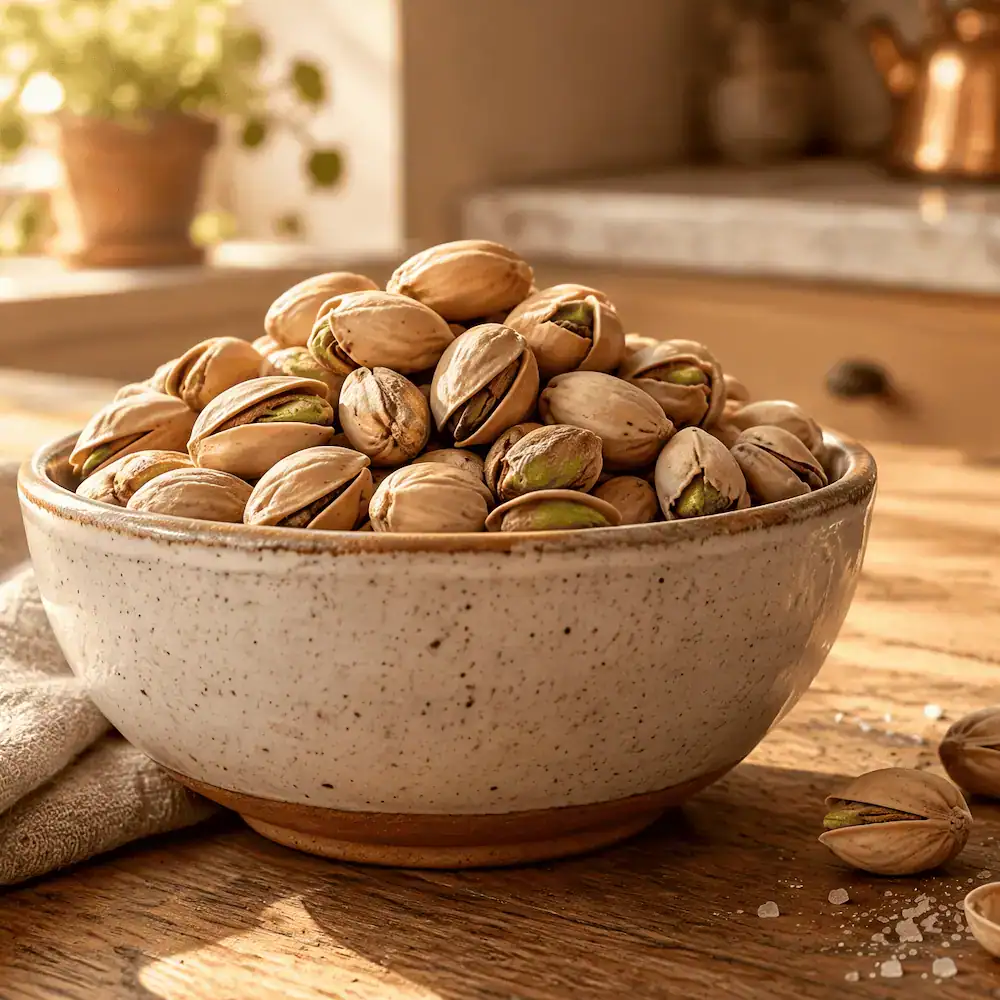
Sometimes called the “smiling nut” because of their naturally split shells, pistachios have been enjoyed for thousands of years. Today, they’re getting fresh attention from people who care about food and health, and from researchers.
But what makes pistachios so special? And are they really as healthy as everyone claims?
Let’s take a closer look at what’s in them and the top five health benefits of pistachios.
Why Are Pistachios So Nutritious?
Pistachios give you a mix of plant-based protein, healthy fats, fiber, vitamins and minerals in one small package.
A 30-gram serving (about one small handful) contains roughly:
- Calories: 170 kcal
- Protein: 6 g
- Fiber: 3 g
- Healthy fats: 13 g
- Vitamin B6: An excellent source
- Potassium: Supports normal muscle and nerve function
- Copper and manganese: Help your body turn food into energy
Pistachios also contain antioxidants, including lutein, zeaxanthin and polyphenols. These help protect your cells from damage.
What makes them especially useful is the combination of protein and fiber. Together with their healthy fats, this makes pistachios a satisfying snack that helps keep hunger in check.

Top 5 Health Benefits of Pistachios
1. Support Heart Health
One of the best things about pistachios is what they can do for your heart.
Most of the fat in pistachios is unsaturated, the healthy kind. Swapping foods high in saturated fat for foods with unsaturated fat can help improve your cholesterol levels.
Research suggests that eating pistachios regularly as part of a balanced diet may help lower LDL cholesterol (the “bad” cholesterol) and improve your blood fats overall.
They also provide potassium, a mineral that helps regulate blood pressure.
Why it matters: Keeping cholesterol and blood pressure in a healthy range is one of the best ways to look after your heart.
2. Help Support Healthy Blood Sugar Levels
Even though they contain carbohydrates, pistachios have only a small effect on blood sugar.
Their mix of fiber, protein and healthy fats slows digestion, so energy is released more gradually.
Researchers have also looked at what pistachios do to blood sugar after a meal. One study found that adding pistachios to carb-heavy foods like white bread, rice or pasta lowered the rise in blood sugar.
So adding a handful to your meals can be an easy way to help keep your blood sugar steadier.
Why it matters: Steadier blood sugar means steadier energy, and it’s good for your long-term health.
3. Promote Gut Health and Digestion
Gut health is one of the biggest topics in nutrition right now, and pistachios have a role to play.
Their fiber helps keep your digestion regular.
But there’s more: pistachios also contain compounds that may act as prebiotics, which means they feed the good bacteria in your gut.
One study found that eating pistachios changed the mix of gut bacteria, including more of the bacteria linked to good gut health. What that means for long-term health is still being studied.
A healthy gut is linked to better digestion, a stronger immune system and a healthy metabolism.
Why it matters: Eating a variety of fiber-rich plant foods is one of the best ways to support a healthy gut. Want more ideas? Read our article on the rise of fibermaxxing.
4. Support Eye Health and Antioxidant Protection
Pistachios stand out among nuts because they contain lutein and zeaxanthin, two antioxidants that matter for your eyes.
Both are found naturally in the back of your eye, where they help protect it from damage caused by light.
Pistachios also contain polyphenols and vitamin E, which add to that protection.
A 2024 study found that people who ate about 57 grams of pistachios a day for 12 weeks had more of this protective pigment in their eyes.
Why it matters: Antioxidants help protect your cells, and lutein and zeaxanthin play a specific role in keeping your eyes healthy as you age.
5. Support Weight Management and Satiety
Can eating nuts actually help with weight management?
Pistachios are fairly high in calories, but they can still help when you’re trying to manage your weight.
There are several reasons for this:
- Their protein helps you feel full. Not sure how much protein you need? Try our protein intake calculator.
- Fiber keeps you satisfied and supports digestion.
- Healthy fats make them satisfying to eat.
- Shelling them yourself slows you down, which makes it easier to snack mindfully.
And your body doesn’t absorb all the calories in whole nuts. Some of the fat stays locked inside the nut’s cell walls. For pistachios, researchers measured about 5% fewer usable calories than standard calculations predict.
Overall, research suggests that eating sensible portions of nuts as part of a balanced diet doesn’t automatically lead to weight gain.
Why it matters: Satisfying, nutritious snacks make healthy eating easier to stick with over time.
How to Include More Pistachios in Your Diet
One of the best things about pistachios is how versatile they are. Their slightly sweet, nutty flavor works in both sweet and savory dishes.
Here are some simple ideas:
For breakfast:
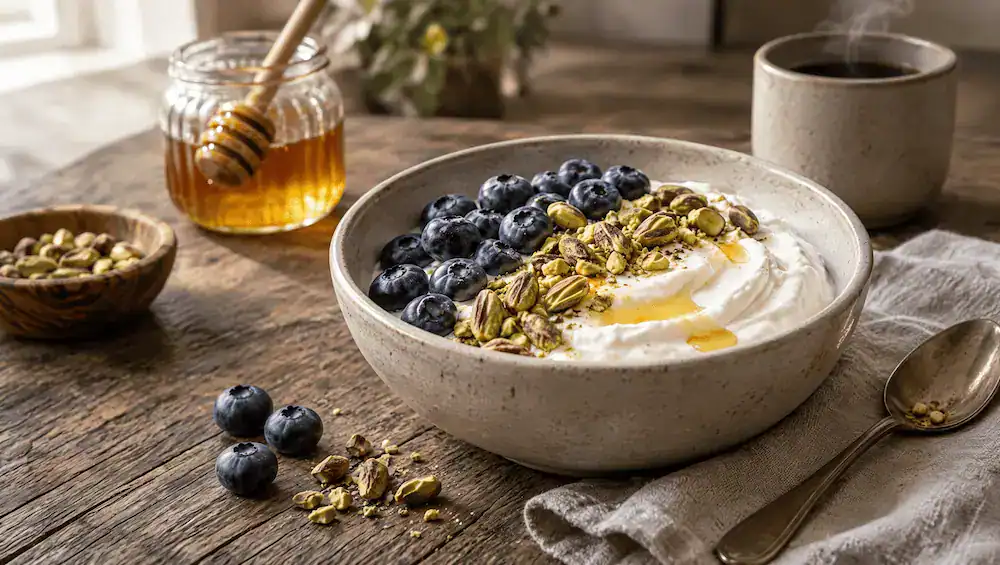
- Add chopped pistachios to Greek yogurt with blueberries.
- Sprinkle them over oatmeal or overnight oats.
- Blend them into a smoothie, like our breakfast smoothie.
For lunch and dinner:
- Use crushed pistachios as a crunchy topping for salads.
- Add them to roasted vegetables.
- Make a pistachio crust for fish or chicken.
For healthy snacking:
- Enjoy a handful of unsalted pistachios between meals.
- Mix them with dried fruit for a homemade trail mix.
- Try pistachio butter on whole-grain toast.
For most people, around 25–30 grams a day is a practical serving, depending on how active you are and the rest of your diet.
When you can, choose unsalted pistachios to keep your salt intake in check.
Are There Any Downsides to Eating Pistachios?
Pistachios have a lot going for them, but there are a few things to keep in mind.
- Allergies: Pistachios are tree nuts and can cause allergic reactions in people with tree-nut allergies.
- Portion sizes: They’re high in calories, so large amounts can add up quickly.
- Salt content: Salted pistachios can contain a lot of salt. Unsalted ones are the better everyday choice.
- Digestive sensitivity: Their fiber can cause bloating or discomfort in some people, especially if you eat a lot at once.
As with all foods, individual needs and tolerances matter.
The Supernutrition Verdict: Are Pistachios Worth Adding to Your Diet?
Absolutely!

Pistachios are much more than a tasty snack. They give you plant protein, fiber, healthy fats, antioxidants and important vitamins and minerals.
Their potential benefits for your heart, blood sugar, gut, eyes and weight make them an excellent addition to a varied and balanced diet.
Of course, no single food is a miracle solution. The biggest health benefits come from consistent habits, variety and an overall healthy lifestyle.
But if you’re looking for a simple way to get more nutrition into your everyday meals, pistachios are well worth trying.
Our Supernutrition tip: Keep a small container of unsalted pistachios in your kitchen or bag. A handful makes a convenient, satisfying snack and is an easy way to add more plant-based nutrients to your day.
Small food choices can make a big difference over time. And sometimes, better nutrition really does come in a little green shell.


